
Hardwood Floor Sanding & Refinishing in West Chicago IL
Worn hardwood does not always need to be replaced. Professional sanding and refinishing can remove years of surface wear and reveal the character that is still in the wood.
Craftsman Hardwood Floors provides hardwood floor sanding and refinishing throughout West Chicago and the surrounding western suburbs. From worn finishes and scratches to outdated stain colors and floors that need to blend with newly installed hardwood, we restore existing floors with careful sanding, color planning and professional finishing.
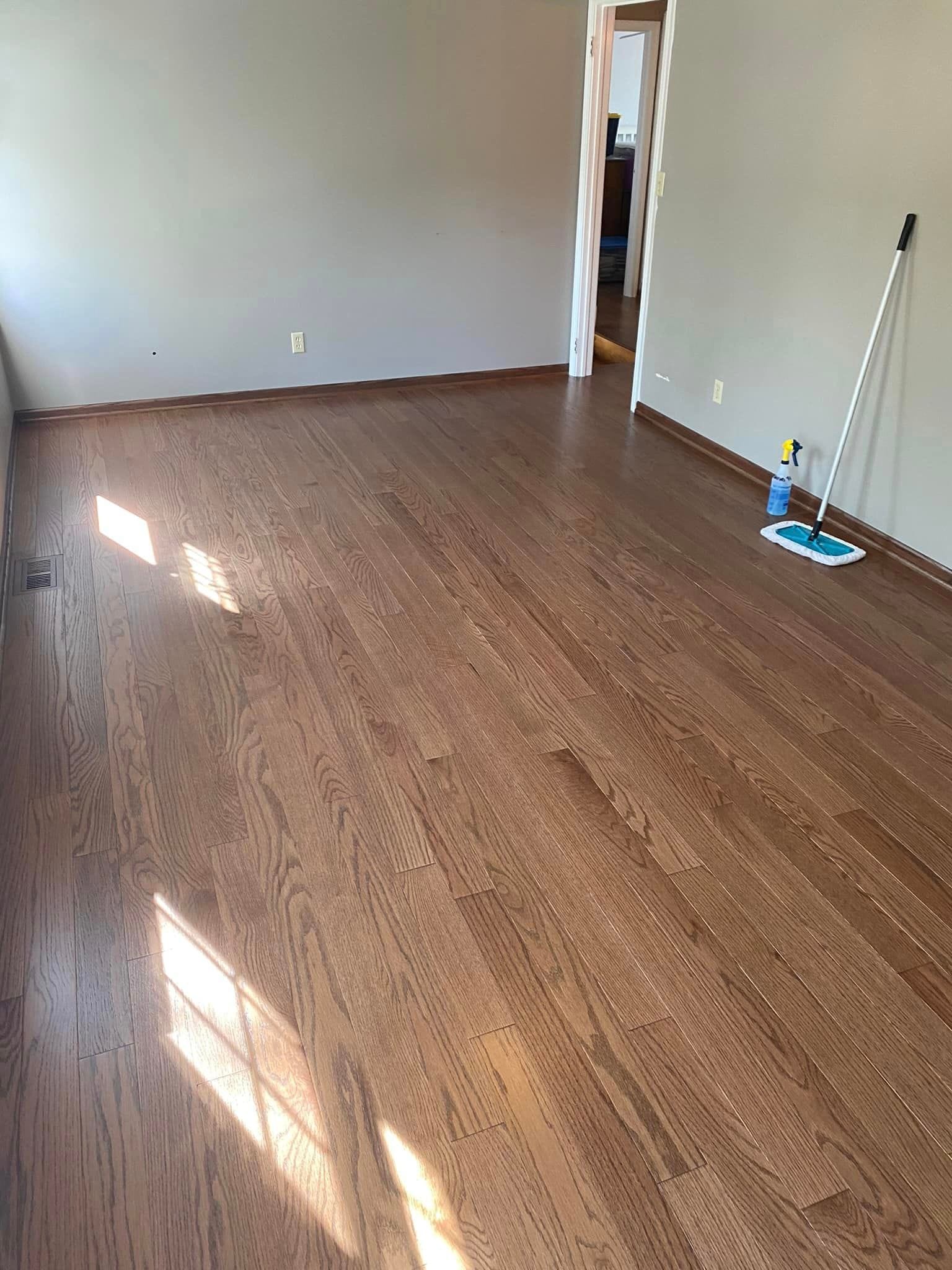
Refinishing Changes More Than the Surface
Sanding removes the old finish and creates the opportunity to repair the appearance of the floor, change its color and protect the wood again.
The goal is not simply to make a worn floor shiny again. A full refinishing project should address the existing condition of the hardwood, produce a consistent surface and create a finish that makes sense for the home and how the floor is used.
Signs Your Hardwood May Be Ready for Full Refinishing
Refinishing is generally the right direction when wear has moved beyond the finish itself or when you want to substantially change the appearance of the floor.
Worn Finish
High-traffic areas look dull, uneven or noticeably more worn than the rest of the floor.
Surface Scratches
Years of traffic have left scratches and marks that routine maintenance cannot correct.
Color Change
You want to move away from the existing stain and create a lighter, darker or more natural look.
Uneven Appearance
Different rooms or traffic areas no longer look consistent in color, sheen or finish condition.
New and Existing Floors
New hardwood has been added and the goal is a more unified appearance with the existing floor.
Finish Failure
The protective finish has worn through or the floor needs more than a simple maintenance coat.
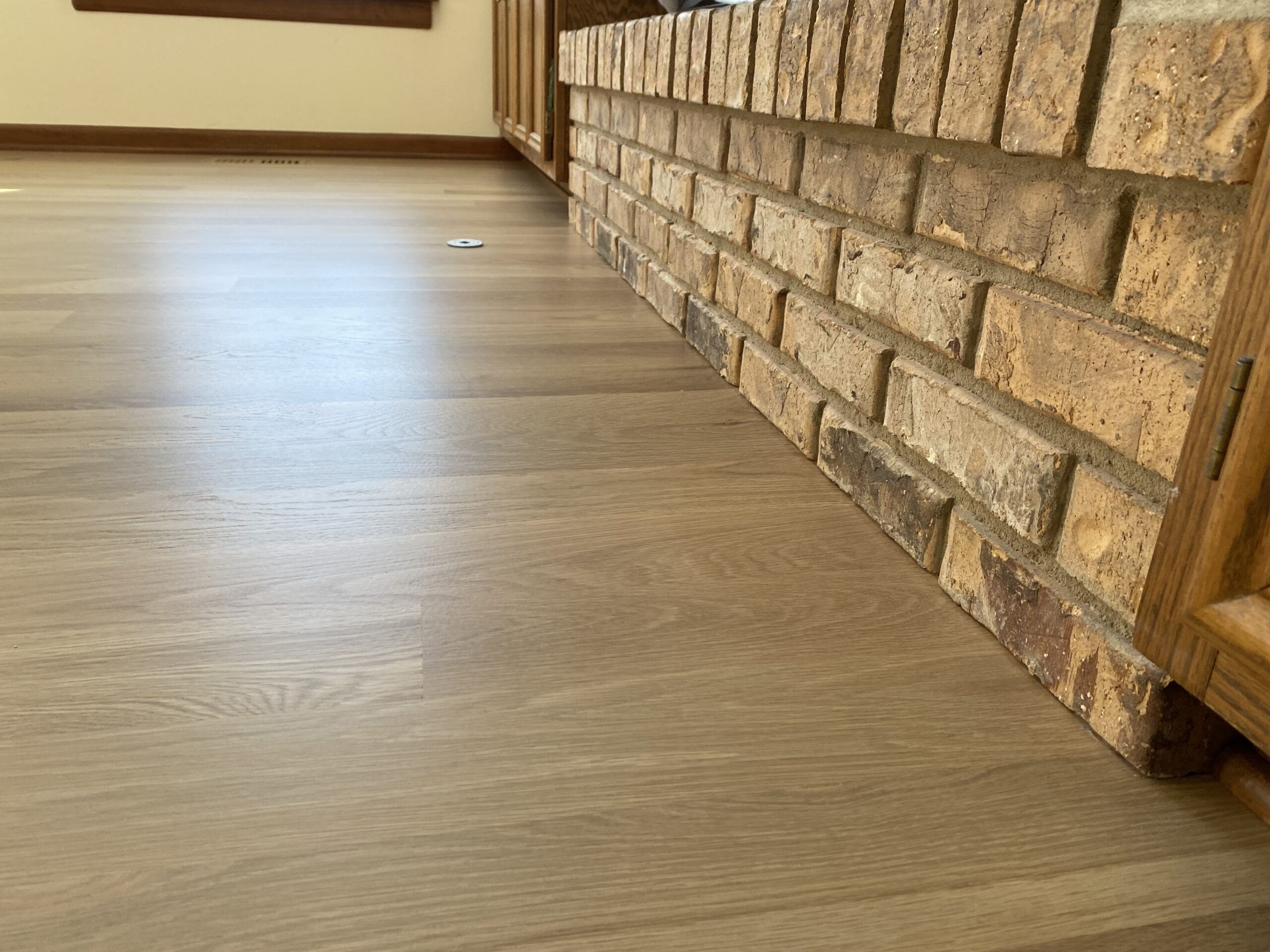
The Old Finish Has to Come Off Evenly
Sanding is the foundation of a refinishing project. The purpose is to remove the existing finish and create an even surface that is ready for stain and protective finish.
Corners, edges, transitions and open areas all need to work together. Rushing this stage can leave visible inconsistencies that become more obvious once stain or finish is applied.
- Existing finish removal
- Progressive sanding
- Edge and perimeter work
- Surface preparation
- Attention to transitions
- Dust-control practices
Refinishing Gives You the Opportunity to Change the Look of the Floor
Once the old finish is removed, the same hardwood can take on a completely different appearance.
Some homeowners want a lighter, more natural floor. Others want deeper stain, more contrast or a warmer traditional appearance. The wood species, existing floor condition and surrounding design all influence how a color will read in the room.
We look at the floor in the context of cabinetry, trim, wall color and the overall design of the home rather than treating stain as an isolated choice.
Whenever appropriate, stain direction should be judged on the actual wood rather than relying only on a small printed sample.
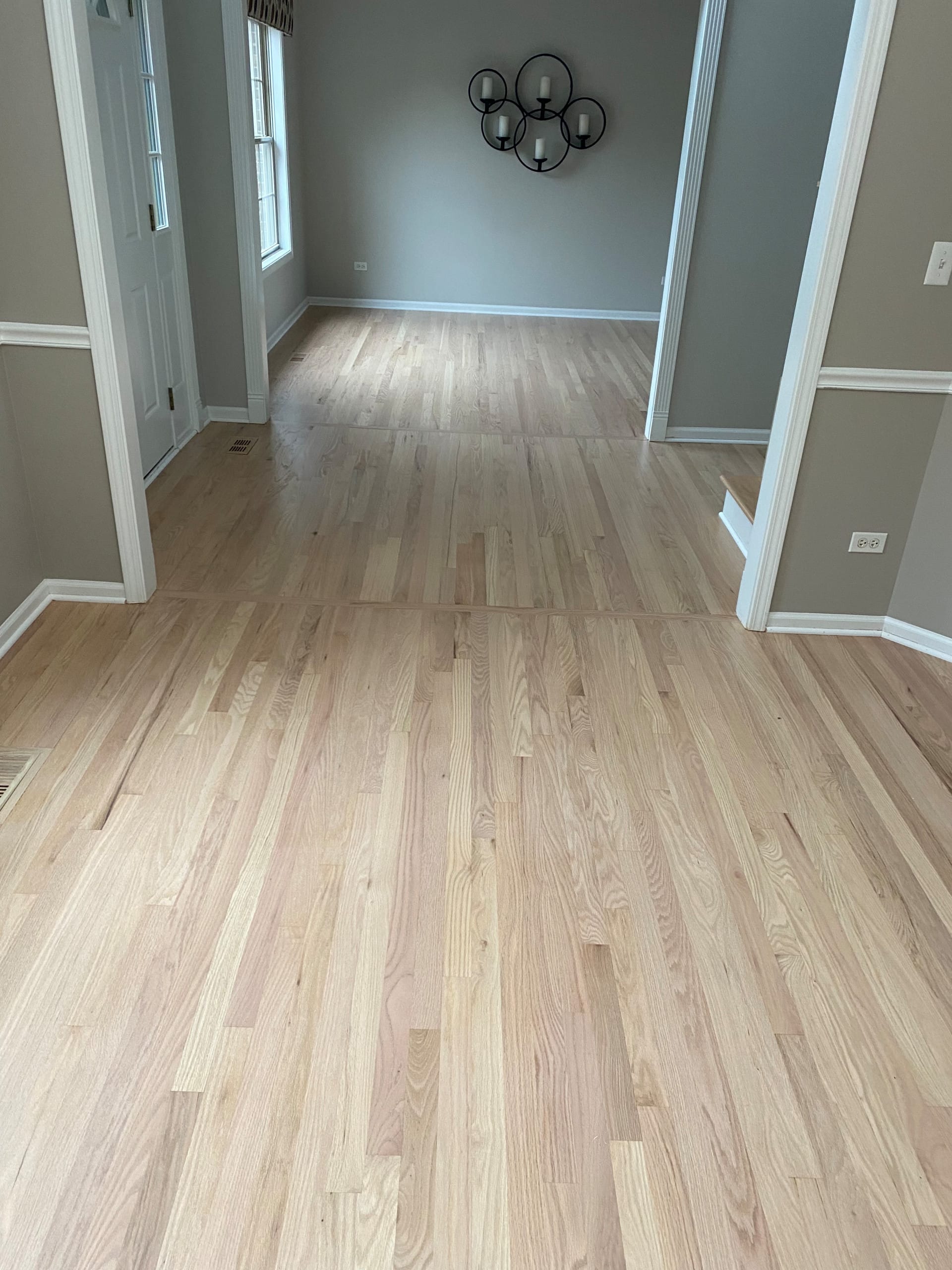
From Worn Hardwood to a Refinished Floor
Evaluate the Floor
We review the existing hardwood, wear, finish condition, repairs, adjoining spaces and the goals for the finished floor.
Prepare the Space
The work area is prepared so sanding and refinishing can be completed as cleanly and efficiently as practical.
Sand the Hardwood
The existing finish is removed and the surface is progressively sanded for a consistent foundation.
Choose the Color
If stain is part of the project, the color direction is evaluated against the actual floor and the surrounding home.
Apply the Finish
Protective finish is applied according to the product, desired appearance and project requirements.
Final Review
We review the finished floor, overall consistency and important final details before the project is considered complete.
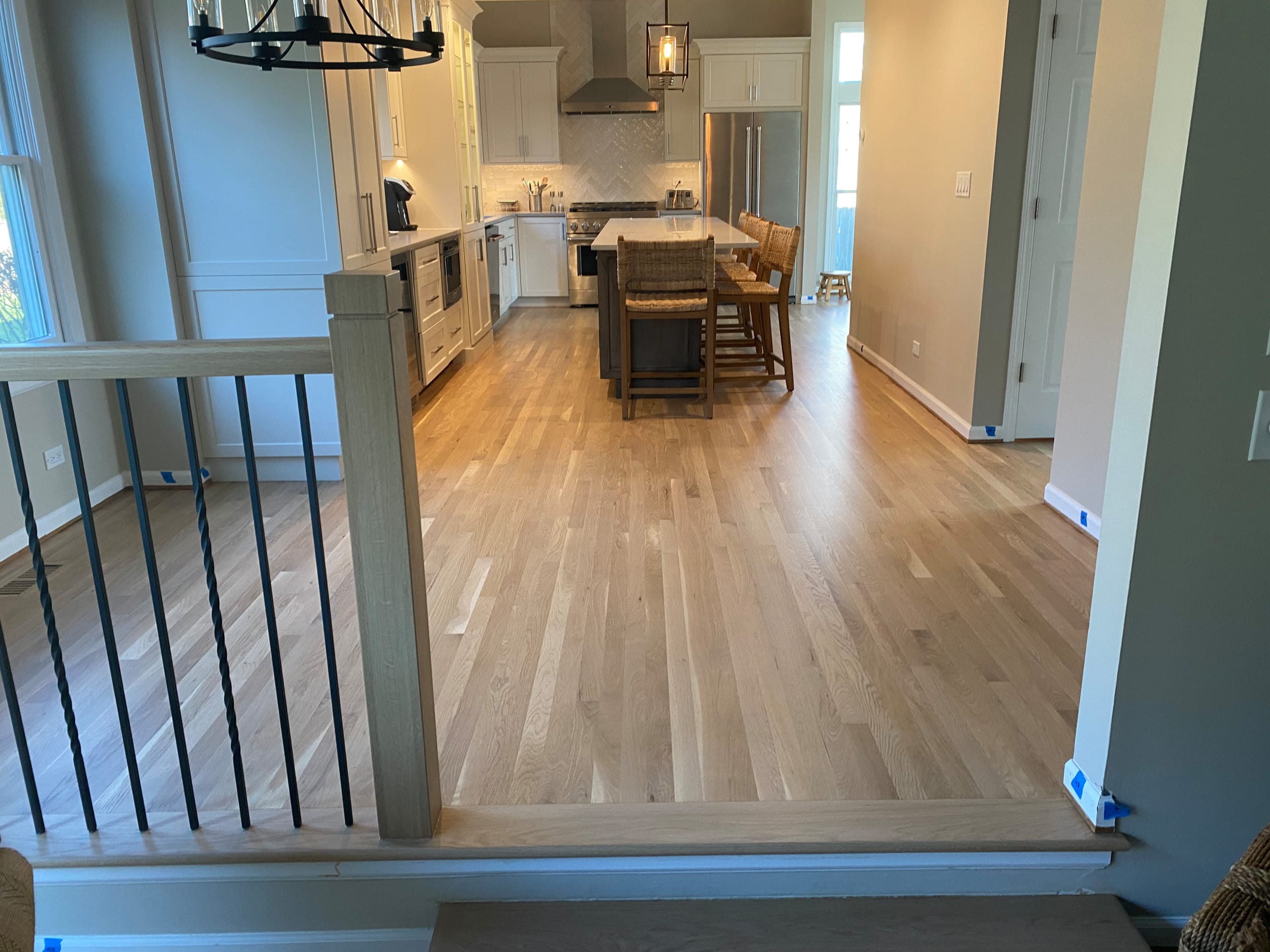
The Finish Changes Both the Look and Performance of the Floor
The finish is what protects the refinished wood from everyday use while also influencing sheen, warmth and the final appearance of the floor.
Different finish systems have different visual and performance characteristics. The right choice depends on the look you want, the floor itself and how the space is used.
Water-Based Finish
Often chosen for a clearer appearance, lower ambering and faster drying characteristics.
Oil-Based Finish
Often chosen when a warmer, more traditional amber tone is part of the desired finished look.
A Refinished Floor Should Feel Like Part of the Home Again
The best refinishing work does not call attention to the process. It makes the hardwood feel consistent, intentional and renewed.
Refinishing can restore the visual continuity of a home, bring life back to tired hardwood and create a completely different design direction without replacing a floor that still has years of useful life left in it.
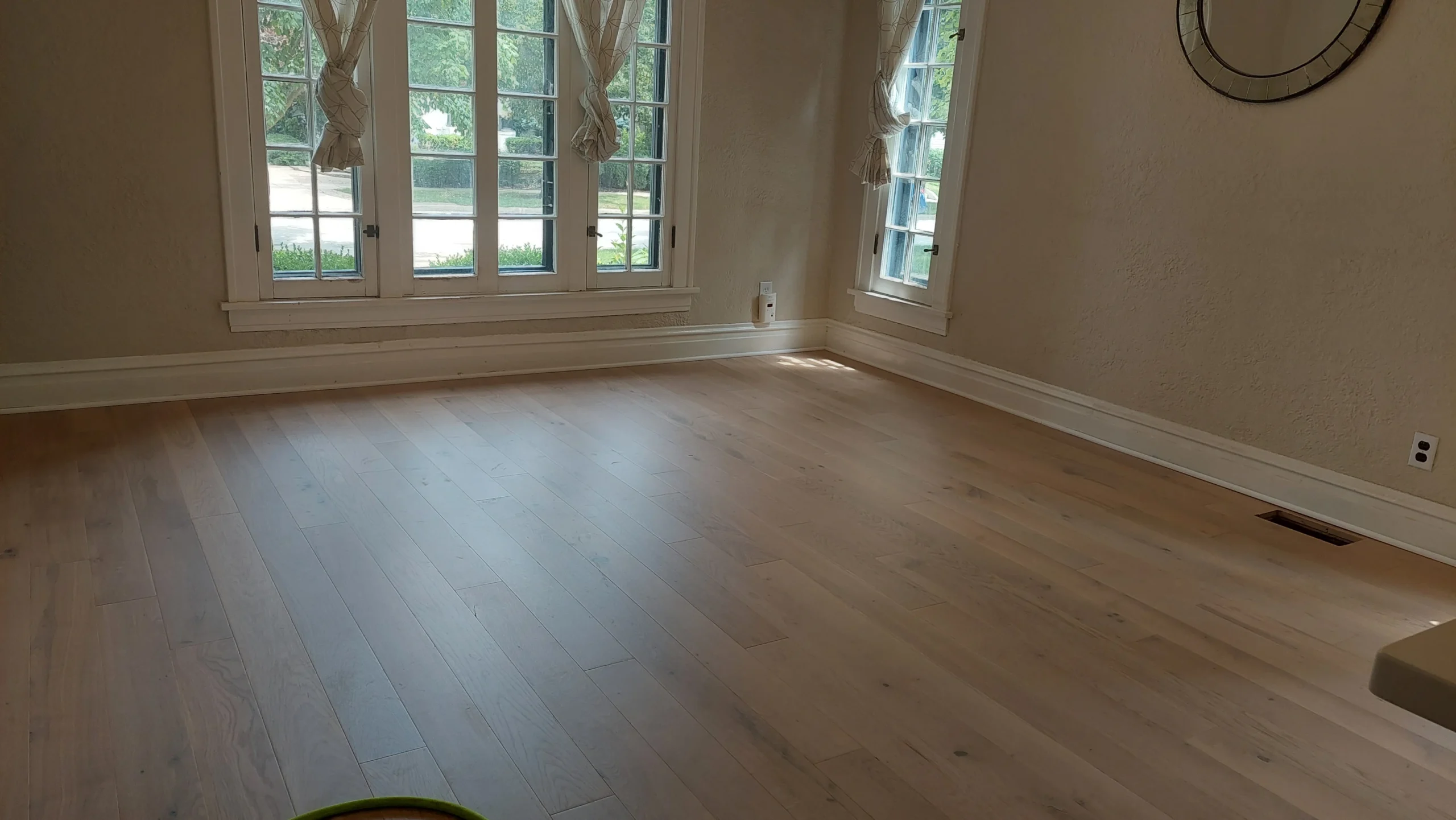
Not Every Worn Floor Needs to Be Sanded
The condition of the finish determines whether the floor needs full sanding and refinishing or whether a maintenance service may be enough.
Sanding & Refinishing
Best when the floor needs substantial restoration or a major appearance change.
- Removes the existing finish
- Addresses visible surface wear
- Allows stain color changes
- Creates a new finished surface
Buff & Coat
May be appropriate when the existing finish is still intact and the floor mainly needs renewed protection.
- Does not remove the floor down to bare wood
- Does not remove deeper scratches or change stain color
- Refreshes an existing finish when conditions allow
- Can help extend the life of the finish
Refinishing Requires Judgment at Every Stage
Sanding, stain direction and finishing all affect the final result. Craftsman Hardwood Floors keeps owner involvement connected to the project instead of treating refinishing as a production-line service.
Tom Farquhar has worked in the hardwood flooring trade since 2009 and remains personally involved in Craftsman Hardwood Floors projects. Craftsman is also an NWFA Certified Installer.
Questions About Hardwood Floor Refinishing
Can Hardwood Floors Be Refinished Instead of Replaced
Often, yes. Whether refinishing is appropriate depends on the type of hardwood, its condition, previous sanding history and the amount of usable wood remaining.
Can Refinishing Change the Color of My Hardwood Floors
Yes. Once the old finish is removed, stain can be used to change the color when the wood species and floor condition are appropriate for the desired look.
Does Sanding Remove Scratches
Sanding can remove many surface scratches and marks. Deeper damage may remain visible or require additional repair depending on how far it extends into the wood.
What Is the Difference Between Refinishing and Buff & Coat
Full refinishing removes the existing finish and sands the wood. Buff and coat is a maintenance process intended to refresh an existing finish when that finish is still in suitable condition.
Can Existing and Newly Installed Hardwood Be Refinished Together
In many projects, yes. Refinishing old and new hardwood together can help create a more unified appearance when the flooring is compatible.
Ready to See What Is Still in Your Existing Hardwood
If your floors are scratched, worn, outdated or simply no longer look the way you want them to, sanding and refinishing may be able to restore them without replacing the hardwood.